
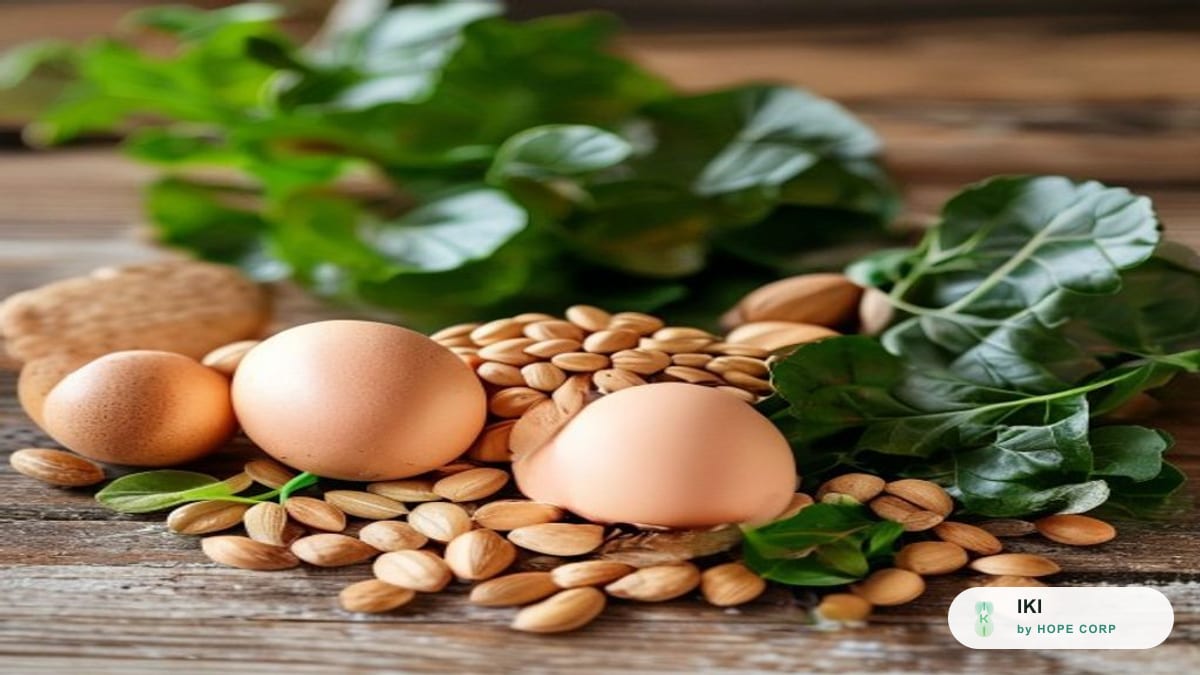
Have you ever brushed your hair in the morning and found a small clump left on the comb, or looked at the fallen strands on the bathroom floor and felt a little uneasy? For many people, weak, dry, brittle hair is a quiet but persistent worry. Our first reflex is usually to switch shampoo, buy an expensive conditioner, or look for a new hair oil. Those external ways of caring have their role, but there's one aspect that's easy to overlook: hair is nourished from within, by the very things you eat each day.
This article by the IKI Health Coach Team looks at hair through the lens of nutrition: why what you eat is connected to your hair, which nutrient groups and foods support stronger hair, and how to bring them into your meals gently. This isn't a story about a quick miracle, but a way of caring for yourself from the roots — patiently and steadily.
Why hair reflects nutrition within
The hair strand you see is actually the "dead" part rising above the scalp. The living part lies in the hair follicle, deep under the skin, and that is exactly where steady nourishment is needed to produce new, strong strands. The hair follicle is one of the most actively working structures in the body, constantly dividing cells so hair can grow longer.
Because it works so hard, the hair follicle is very "sensitive" to your overall nutritional state. When the body has to prioritize resources for vital organs like the heart and brain, hair — not essential for survival — often gets placed last. This is why, when you eat poorly, restrict too much, or go through a stressful period, hair is often one of the first places to "speak up": shedding more, growing more slowly, and becoming thin and weak.
By its nature, a hair strand is made mostly of a protein called keratin. In other words, hair is protein. This explains why a diet lacking protein over a long time affects hair quite noticeably. Beyond protein, forming a healthy strand also calls for iron to carry oxygen to the follicle, zinc to support tissue renewal, along with many other vitamins and minerals that act as the quiet "assistants."
Understanding this helps us expect less from topical products as a complete solution. Caring for hair from the outside is like cleaning and protecting the ends, while nutrition tends to the roots. The two complement each other, but caring only for the ends while neglecting the roots is hard to sustain.
Nutrient groups that support stronger hair
No single nutrient is a "master key" for hair. Hair health comes from the combination of several nutrient groups. Here are the most notable ones, along with why they matter.
Quality protein
Since hair is protein, this is the first foundational group to secure. When the diet lacks protein over a long period, the body tends to push more follicles into a resting phase, causing more shedding some months later. Good protein sources for hair are plentiful: eggs, fish, lean meat, seafood, beans and tofu, yogurt, along with plant protein from beans and seeds. An easy goal to remember is to have a clear portion of protein at every main meal, rather than a meal that's all starch.
Iron and zinc
Iron takes part in carrying oxygen to the hair follicle, while zinc supports renewal and keeps the oil glands around the follicle working steadily. Iron deficiency is one of the common nutritional factors linked to hair loss, especially in women of menstruating age. Good iron sources include red meat, liver, egg yolk, beans, and dark leafy greens; zinc sources include seafood (especially oysters), meat, pumpkin seeds, and cashews. Iron from plants is absorbed less well, so it helps to pair it with vitamin C-rich foods such as oranges, guava, and tomatoes to boost absorption.
The B-vitamin group
The B vitamins, especially biotin (B7), are often mentioned in the story of hair care. Biotin takes part in metabolism and in forming keratin. The good news is that biotin is present in many familiar foods such as eggs, nuts, whole grains, and sweet potatoes, so a severe deficiency is fairly rare in people who eat a balanced diet. Other B vitamins also contribute to nourishing the follicle and keeping energy up for these hard-working cells.
Healthy fats and omega-3
Healthy fats help the scalp and hair strands keep their natural moisture and stay less dry. Omega-3 from fatty fish (salmon, mackerel, herring), flaxseed, chia seeds, and walnuts is noted for its role in supporting a healthy scalp. Naturally shiny, smooth hair usually goes hand in hand with a diet that isn't overly low in fat — as long as you choose the right healthy fats rather than heavily fried foods.
Vitamins C, E, and antioxidants
Vitamin C not only helps absorb iron better but also takes part in forming collagen, a component of the structure around the hair follicle. Vitamin E and other antioxidants from colorful vegetables and fruit help protect cells from damage. This is why a plate full of color, rich in vegetables and fruit, is always encouraged as a foundation for both overall health and hair.
What's worth remembering is that none of these nutrient groups works in isolation. They work together, and the surest way to get enough is to eat a variety of whole foods, rather than hunting for a single "superfood for hair."
Familiar foods good for hair
The theory of nutrient groups becomes easier to apply when it comes down to specific dishes on the Vietnamese table. Here are familiar, easy-to-find foods you can prioritize if you care about your hair.
- Eggs: a complete protein source that also contains biotin. One or two eggs at breakfast is a tidy way to get both enough protein and micronutrients.
- Fatty fish: salmon, mackerel, herring, and round scad provide quality protein and omega-3. Eating fish a few times a week is a good habit for both heart and scalp.
- Dark leafy greens: spinach, kale, katuk, and Malabar spinach are rich in plant iron, vitamin C, and antioxidants. You can find more suggestions in the article Leafy Greens: Why to Have Them in Your Daily Meals.
- Beans and legumes: lentils, black beans, chickpeas, and soybeans provide plant protein, iron, and zinc — especially useful for people who eat little meat.
- Nuts and seeds: pumpkin seeds are rich in zinc, walnuts and flaxseed offer omega-3, and almonds provide vitamin E. A handful of nuts a day is a hair-friendly snack.
- Shellfish: oysters, clams, and scallops are rich in zinc, an important mineral for the hair follicle.
- Sweet potatoes and carrots: rich in beta-carotene, which the body converts into vitamin A, contributing to a healthy scalp (note: don't overuse high-dose vitamin A supplements).
- Vitamin C-rich fruit: oranges, guava, kiwi, and strawberries help iron absorption and support collagen formation.
- Yogurt and dairy products: provide protein and some micronutrients, suitable as a light snack.
You don't need to eat all of these in one day. The idea is to rotate them through your meals over the week, so your hair — and your whole body — receives a diverse supply of nutrients. Nuts are an easy starting point because they're convenient to carry; the article Nuts and Seeds: Small but Mighty Nutrition has more tips on choosing and storing them.
When you eat vegetarian or little meat
Many people worry that eating vegetarian or cutting back on animal protein will weaken their hair. In reality, vegetarians can keep their hair healthy by paying attention to a few points. The challenge isn't a lack of protein overall, but that some hair-related nutrients such as iron, zinc, and vitamin B12 tend to be harder to get enough of when animal sources are removed.
For iron and zinc, the solution is to eat a variety of beans, seeds, dark leafy greens, and whole grains, while pairing them with vitamin C-rich foods to boost absorption. For vitamin B12, which is found almost only in animal foods, strict vegetarians usually need to get it through fortified foods or supplements, and should talk with a nutrition professional to use them correctly.
For protein, the key is to combine several plant protein sources through the day rather than relying on a single dish. On busy mornings when it's hard to put together a protein-rich meal, a convenient plant protein source like True Vegan Protein can be a compact way to enrich a meal — for example, added to a smoothie or a bowl of oat porridge. Think of it as a way to complement a balanced lifestyle, alongside fresh daily food, rather than a replacement for a complete meal. If you'd like to look more closely at how to eat vegetarian while staying nutritionally balanced, the article Eating Vegetarian, Balanced and Complete will be helpful.
More than just eating: the habits that go with it
Nutrition is the foundation, but hair is also shaped by your whole lifestyle. If you focus only on food while overlooking the factors below, the results usually fall short of what you'd hoped.
Sleep enough and regularly. During sleep, the body does most of its recovery and renewal, including for fast-growing tissues like hair. Chronic lack of sleep is a quiet strain on the whole body. If you often toss and turn, the article Quality Sleep has suggestions that are easy to apply.
Keep your mind balanced. Prolonged stress can push many follicles into a shedding phase at once — a phenomenon that sometimes appears a few months after a stressful event or period. This is why healthy hair can't be separated from a rested mind. Small quiet moments each day, slow breathing, and gentle walks all help.
Don't diet to extremes. Overly harsh diets that sharply cut energy and eliminate whole nutrient groups in a short time often cause more hair shedding, because the body reads it as a signal of "scarcity" and prioritizes resources elsewhere. Eating enough and balanced is always friendlier to hair than going hungry.
Be gentle with your hair. Tying hair too tightly, frequent high-heat blow-drying, and constant perming or dyeing all damage the strands from the outside. Caring from the inside out is more complete when you also go easy on styling.
Drink enough water. The scalp, like any other area of skin, needs enough water to stay healthy. This is a small but foundational habit, easy to forget when you're busy.
Misconceptions about nutrition and hair
Around the idea of caring for hair from within, there are quite a few inaccurate beliefs. Let's untangle a few common knots.
"Just take a lot of biotin and hair loss will stop." Biotin is indeed needed for hair, but severe biotin deficiency is fairly rare in people who eat normally. If hair loss is due to another cause, such as iron deficiency, hormonal changes, or stress, high-dose biotin is unlikely to make a difference. Aimless supplementing is both wasteful and can interfere with some lab tests.
"You are what you eat — for dark, strong hair, eat lots of black sesame." Black sesame is a good food, rich in healthy fats and minerals, but no single food determines the color and strength of hair. It's the variety of the whole diet that matters.
"Hair loss is only about nutrition." Not quite. Hair loss can relate to genetics, hormones, the thyroid, the postpartum period, recovery from illness, the effects of certain medicines, or a scalp condition. Nutrition is an important piece but not the whole. If hair loss is unusually heavy and persistent, see a doctor to find the right cause.
"Eat well for a few days and hair gets healthy right away." Hair grows very slowly, so any change from within takes time measured in months. Expecting quick results easily leads to discouragement and giving up early. Consistency is what makes the difference.
"Hair supplements are a must." For people who eat a balanced diet, most of the nutrients hair needs can come from food. Supplements should only be an option when there is a specific deficiency, and are best used on a doctor's advice.
In closing
Strong hair rarely comes from a miracle bottle; it is usually the result of a body well nourished from within. When you eat enough quality protein, add iron, zinc, and healthy fats, and fill your plate with colorful vegetables, while also sleeping enough and keeping your mind balanced, you are tending to the roots of your hair, not just the ends.
Start with one small change this week: add a clear portion of protein to each main meal, keep a box of nuts ready for your afternoon snack, or add a plate of dark greens to dinner. "Good enough" choices repeated steadily, together with patience, are how you care for your hair — and yourself — over the long term.
Finally, a reminder that this is general nutrition information for reference. If you have unusually heavy hair loss, clearly thinning hair, loss in patches, or you are pregnant or have an underlying condition, see a dermatologist or talk with a nutrition professional for an assessment and advice suited to you.