
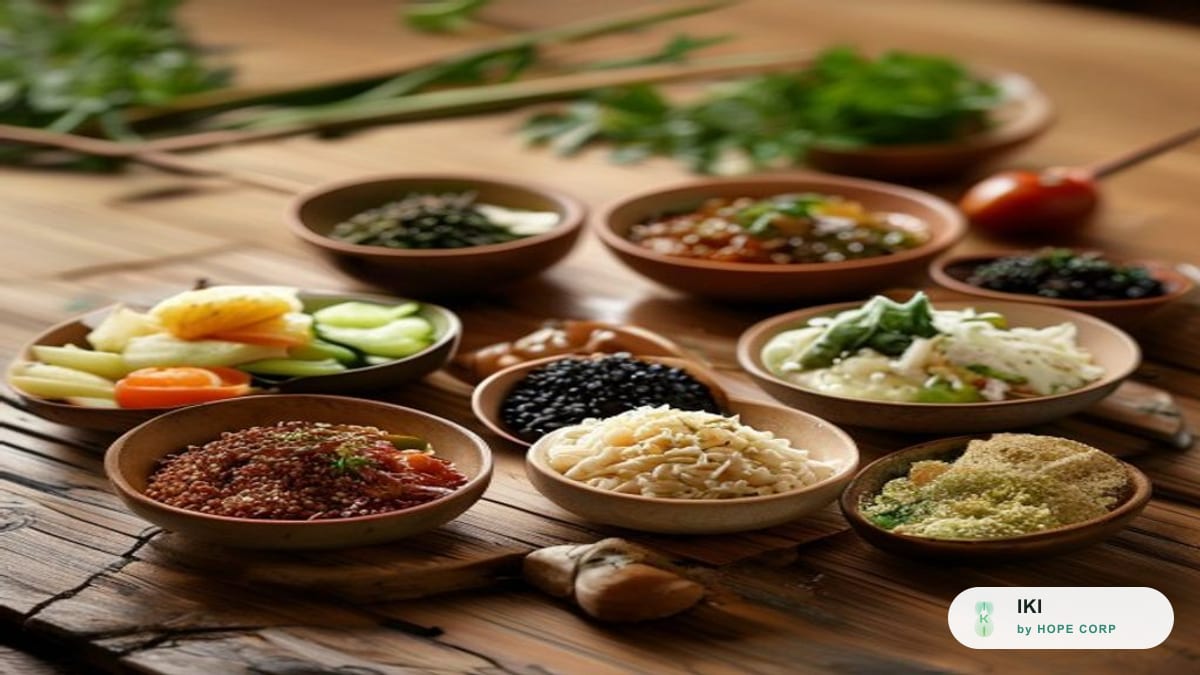
If you've ever sat down at a Japanese restaurant, your meal may well have begun with a small bowl of light-brown, warm and savory soup: that's miso soup. And if you've ever tried the sticky soybeans with a very distinctive smell eaten with hot rice, you've met natto. These dishes sound unfamiliar, but they actually belong to a group of foods Vietnamese people know very well: fermented foods.
Fermentation is one of humanity's oldest ways of preparing food, present in almost every cuisine. The Japanese have miso, natto and shoyu sauce; Vietnamese have pickled vegetables, pickled eggplant, soybean paste and fish sauce. In essence, they all use time and natural microbial cultures to transform food, creating rich new flavors and a clever way to preserve it. This article will explore what Japan's signature fermented foods are, why they've kept their long-standing place in meals, how to use them in moderation and sensibly, and how to bring the spirit of fermentation to the everyday Vietnamese table.
What Japanese fermented foods include
Japanese cuisine has a rich treasury of fermented foods, seen as the foundation of many meals. Let's run through the most representative names so you can picture them easily.
Miso
Miso is a thick paste made from soybeans fermented with salt and koji mold, sometimes combined with rice or barley. The aging process can last from a few months to a few years, producing a paste ranging in color from pale yellow to deep brown, with a distinctive rich salty-sweet flavor. Miso is most commonly used to make soup, but it's also a seasoning for many braised, marinated and mixed dishes. A spoonful of miso stirred into broth is enough to bring a whole bowl of soup to life.
Natto
Natto is a whole-soybean fermented dish, famous for its sticky, stringy texture and fairly strong smell. It's a dish that divides tastes: some love it, some find it hard to eat from the first bite. In Japan, natto is usually eaten at breakfast, mixed with hot rice, with added scallion, shoyu and a little mustard. Though it's an acquired taste, natto is a familiar, long-standing part of traditional Japanese meals.
Shoyu and other sauces
Shoyu, or Japanese soy sauce, is a liquid sauce fermented from soybeans and wheat, used as a familiar seasoning and dipping sauce. Alongside it are tamari and many other sauce variations. This is a group of fermented seasonings present in nearly every Japanese meal, serving to build a foundation of rich flavor.
Tsukemono, pickled vegetables
The Japanese also have a tradition of pickling vegetables, collectively called tsukemono. These might be radish, cucumber, ginger or eggplant pickled in many different ways. These pickles are usually served with rice in small amounts, adding a crisp, sour, salty accent to the meal. This is very much like the familiar plate of pickles on the Vietnamese table.
Why fermented foods have a long-standing place in meals
Before refrigerators and modern preservation technology, fermentation was a clever way to keep food for longer. Soybeans and vegetables, through fermentation, could be stored across seasons, becoming a stable source of food. This is the practical reason fermented foods appear across every cuisine, from Asia to Europe.
But fermented foods have lasted not only because they're convenient to preserve. Fermentation also creates new flavors that fresh ingredients don't have: a rich, complex, deep taste, what cooking calls umami. This special flavor is exactly what makes fermented foods an indispensable part of adding depth to a meal. A bowl of miso soup, a little seasoning sauce, some pickles can lift a whole simple meal to another level of deliciousness.
In terms of eating habits, fermented foods also make meals more varied. They add different flavors and textures alongside rice, vegetables, meat and fish, making the table richer and less monotonous. In the spirit of balanced eating, variety is always something to encourage, and fermented foods are a natural way to achieve it.
It's worth being clear here, to avoid exaggeration: fermented foods are an interesting and flavorful part of a meal, bringing variety and a pleasant feeling when eaten with rice and vegetables. That's the measured way to see their role in everyday eating habits, as a culinary tradition worth cherishing rather than something miraculous.
How to use fermented foods sensibly
Fermented foods are well worth bringing into your meals, but they also need to be used the right way to bring out their tastiness while staying balanced. Here are some practical notes.
Use in small amounts
A common feature of many fermented foods, especially miso, sauces and pickles, is that they're fairly salty. So the most important principle is to use them in small amounts, as an accent rather than a main dish. A light bowl of miso soup, a spoonful of seasoning sauce, a little pickle on the side is reasonable. Eating too many salty things in a day isn't a skillful way to use them. People who need to limit salt for health reasons should pay particular attention to this and consult a professional.
Choose low-salt, low-sugar versions
When buying ready-made fermented foods, look at the label and favor low-salt, low-sugar, low-additive versions. Some industrial products may add a lot of salt or sugar to boost flavor and preserve them. Reading carefully and choosing wisely lets you enjoy the tastiness of fermented foods without taking in too much of what you don't need.
Start slowly with new foods
If you're not yet used to fermented foods, especially strong-smelling ones like natto, start with small amounts. This helps your palate get used to them gradually, and lets your body adapt to a new food gently. Not everyone suits every kind of fermentation, so observe how you feel and choose the dishes you find comfortable.
Combine with rice and vegetables
Fermented foods work best when paired with rice, vegetables and other dishes in a balanced meal, rather than eaten alone. A bowl of miso soup to open the meal, a little pickle with rice and boiled vegetables is a harmonious pairing. Used this way, they are both tasty and keep the whole meal balanced.
Notes for certain cases
Fermented foods suit most people when used in moderation, but there are a few cases that need more caution. People who need to limit salt for health reasons should pay particular attention to salty dishes like miso, sauces and pickles, as salt can add up quickly over a day. People with sensitive stomachs sometimes feel discomfort when eating a lot of sour, spicy or strong-smelling foods, so start with very small amounts and observe your body's response. With homemade pickles, take care to keep everything clean during the pickling process to avoid spoilage and mold. If you have an underlying condition or a special diet, it's best to talk with a nutritionist or doctor before making major changes to your eating habits. The general principle remains: go slowly, stay moderate, and listen to your own body's feedback.
Bringing the spirit of fermentation to the Vietnamese table
The interesting thing is that you don't need to run out and buy miso or natto to apply this spirit. Vietnamese cuisine is already rich in fermented foods, and you can absolutely make the most of what's familiar.
Make the most of existing Vietnamese fermented foods
Pickled mustard greens, pickled eggplant, Vietnamese-style kimchi, and fermented soybean pastes are all close-to-home fermented dishes. A plate of mildly salted pickles on the side, a little dipping sauce for boiled vegetables is a very Vietnamese way to use fermented foods. Favor low-salt versions, homemade or bought from a trusted source, and use them in moderate amounts as an accent to the meal.
Add yogurt to the menu
Yogurt is also a familiar and easy-to-use fermented food, especially good for breakfast or a snack. A cup of unsweetened yogurt with fruit is a gentle way to bring fermented food into your day. The article How to Eat Breakfast for an Energized Day has more ideas for putting together a balanced breakfast, in which yogurt is a good option.
Try Japanese dishes when you get the chance
If you're curious, try miso and natto when you can. Miso is fairly accessible and easy to cook: just dissolve miso into warm broth, add tofu, seaweed and scallion for a simple bowl of soup. Natto is more of an acquired taste, but it's worth trying at least once to know. See this as a way to enrich your culinary experience, not an obligation.
Pickle vegetables at home
Pickling vegetables at home is a fun and proactive way to have clean, low-salt fermented food to your own taste. Mildly salted pickled cabbage, kohlrabi and carrots are easy to make and let you control the amount of salt and sourness. This is also a way to make the most of seasonal vegetables, a spirit you can read more about in the article Eating by Season and Constitution.
Misconceptions about fermented foods
Around the topic of fermented foods there are quite a few exaggerated or misguided beliefs. Let's keep a clear-eyed view.
"The more fermented food you eat, the better." Not really. Many fermented foods are fairly salty, so eating too much isn't a skillful choice. The right spirit is to use them in moderation, as part of a varied meal, not to load up on them thinking more is better. Moderation remains the top principle.
"Fermented foods can replace a balanced meal." No. Fermented foods are a part that enriches a meal, not something that can stand alone in place of good carbs, protein, vegetables and healthy fats. See them as seasonings and accents, set within the picture of a full meal. The article 8 Healthy Food Groups gives you a framework for that balance.
"All fermented foods are the same." Actually they're very diverse in ingredients, preparation, saltiness and flavor. Miso is different from pickles, natto is different from yogurt. Understanding the characteristics of each helps you use them the right way and to suit your taste.
"You have to eat Japanese fermented foods for it to count." Not necessary. Vietnamese fermented foods such as pickles, soybean paste and yogurt serve the spirit of variety and rich flavor in a meal just as well. The value lies in the principle of using fermented foods in moderation, not in their origin.
Starting gently
If you'd like to bring fermented foods into your meals more intentionally, take small steps.
- Week one: add one familiar, easy-to-eat fermented food to your menu, for example unsweetened yogurt as a snack, or a little mildly salted pickle with rice.
- Week two: try cooking a simple bowl of miso soup, or pickle a seasonal vegetable yourself with a moderate amount of salt.
- Week three: pay attention to your overall salt intake for the day, balancing so fermented foods are an accent rather than making the meal too salty.
- Week four: look back and keep the dishes you find suit your taste and are easy to sustain. There's no need to force yourself to eat something you don't like.
Remember that the goal is to make meals richer and more pleasant, not to turn eating into a test. Choose what you truly like and can keep up for the long term.
In closing
Japanese fermented foods such as miso and natto are long-standing culinary traditions, rich in flavor and woven into everyday Japanese meals. But you don't have to go far to learn that spirit: Vietnamese cuisine already has a whole treasury of familiar fermented foods, from pickles and soybean paste to yogurt. What matters is using them in moderation, favoring low-salt versions, and placing them within a varied, balanced meal.
This is exactly the spirit IKI pursues on the journey of balanced eating: cherishing traditional culinary treasures, using them moderately and clearly, so that every meal is both tasty and light. You can start today, with just one small thing: add a fermented food you love to your meal, in a moderate amount. To understand more about placing fermented foods within a full meal, read the article 8 Healthy Food Groups. And if you need to limit salt or follow a special diet, don't hesitate to talk with a nutritionist for suggestions suited to you.