
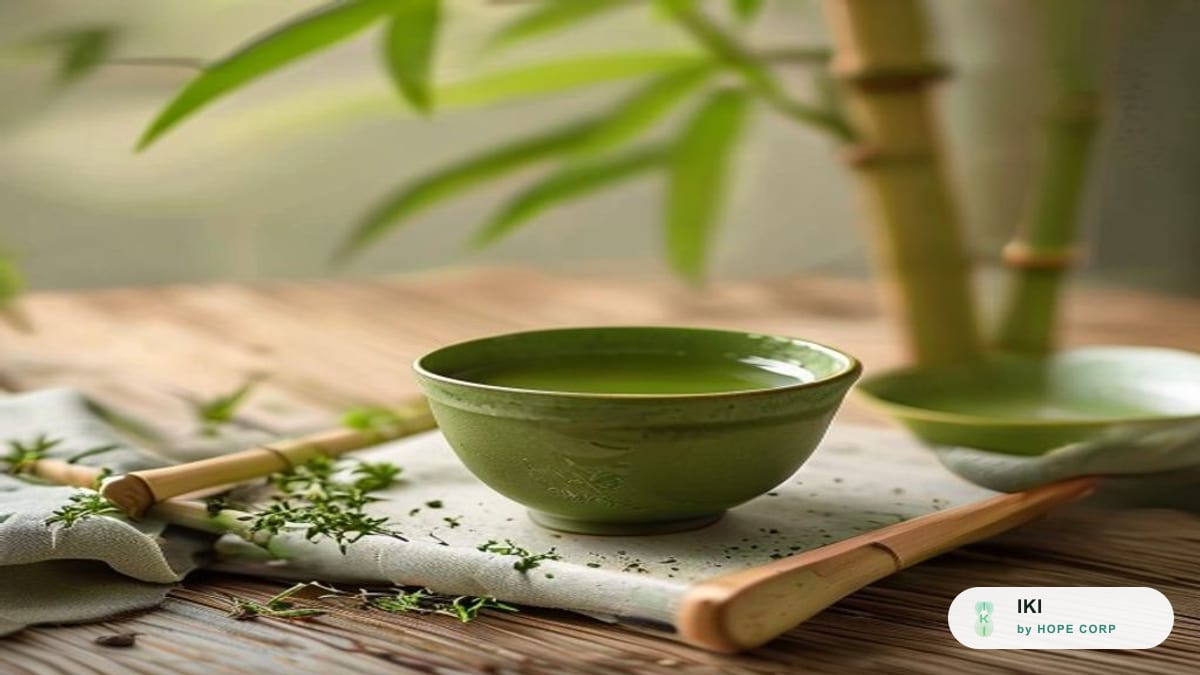
There's a very Japanese image many people have seen in films or paintings: someone sitting quietly beside a still-steaming bowl of green tea, holding the bowl in both palms, sipping slowly. That moment is about more than quenching thirst. It's a way of living, a way the Japanese give themselves a few minutes to slow down in the middle of the day, to listen to the warmth of the cup and of themselves.
Green tea and matcha are two drinks long tied to Japanese culture, and today they're loved by many Vietnamese too. But behind the fashionable matcha latte or the familiar packet of green tea lies a whole tea-drinking tradition worth exploring. This article explores with you the difference between green tea and matcha, the spirit of the Japanese tea ritual, how to brew at home, the right times to drink, along with a few common misconceptions. This is a view of healthy living: seeing tea-drinking as a moment of caring for the mind, not just a drink.
Green tea and matcha: how they're alike and different
The first thing to clarify is that both green tea and matcha come from the same plant: the tea plant, botanically Camellia sinensis. This is also the plant that gives us black tea and oolong, differing only in processing. So when we speak of green tea and matcha, we're talking about two different ways of processing and enjoying the same base material.
Green tea is tea leaves that, after picking, are quickly heated to preserve their green color, then dried. To drink it, you place the dried leaves in a pot or a tea bag, pour hot water to steep so the aroma and flavor release into the water, then discard the spent leaves. That is, you drink only the essence steeped into the water, not the leaves.
Matcha is more special. The tea plants used for matcha are usually shaded for a few weeks before harvest, helping the young leaves keep a deep green color and a characteristic mellow taste. The young leaves are then steamed, dried, deveined, and ground very finely with a stone mill into a smooth green powder. When drinking matcha, you don't steep and discard; you whisk the powder into water and consume the entire ground leaf. This is the core difference: with matcha, you take in the whole tea leaf, not just the steeped water.
This difference in processing leads to a difference in experience. Matcha usually has a vivid deep green color, a bold, creamy taste, and a distinctive touch of clean astringency. Steeped green tea is usually paler in color, with a lighter, cleaner taste. As for caffeine, because matcha is pure powdered leaf consumed whole, a cup of matcha usually brings a clearer sense of alertness than an ordinary cup of steeped green tea, though the exact amount depends on how it's brewed and how much you use.
It's worth being clear to avoid mistaken expectations: both green tea and matcha are drinks that belong to a healthy lifestyle, not a solution for any specific health problem. Enjoy them the way you'd enjoy a good cup of tea and a quiet moment, keeping everything in moderation.
The spirit of the Japanese tea ritual
What makes Japanese tea culture special isn't the type of tea but the spirit of drinking it. The Japanese have an entire art of drinking tea, called the tea ceremony (chado), practiced as a way of cultivating attention, respect, and stillness. Though most of us don't practice the elaborate tea ceremony, its core spirit is well worth learning and easy to bring into everyday life.
That core is full presence. When preparing a bowl of matcha the traditional way, one focuses on each movement: sifting the powder, pouring the water, whisking the tea into a fine foam, lifting the bowl, sipping slowly. Each step is an invitation to return to the present, setting aside the clutter of worries. In the rush of modern life, it is precisely this deliberate moment of slowing down that is precious — perhaps even more than the tea itself.
The Japanese tea ceremony is often summed up in four spirits: harmony (wa), respect (kei), purity and clarity of mind (sei), and tranquility (jaku). You don't need to grasp the full philosophical depth of these to absorb the simple meaning: drinking tea is an occasion to let the mind settle, to treat yourself and those drinking with you kindly, and to find a small pocket of peace in the middle of the day.
The most beautiful thing is that you can absolutely bring this spirit into your own cup of tea each day, without complex tools or elaborate ritual. Just when you brew tea, set your phone aside for a moment, focus on the warmth in your hands, breathe in the aroma, and sip the first few sips very slowly. That alone turns an ordinary drink into a moment of caring for the mind. This is also the spirit that Stress and Irritability: Habits to Keep a Balanced Mind means to suggest: small, deliberate pauses that help you recharge your inner energy.
How to brew green tea and matcha at home
Brewing a good cup of tea doesn't require lofty technique, but a few small notes about temperature and time make a big difference to the flavor.
Brewing green tea
The most common mistake when brewing green tea is using water that's too hot. Furiously boiling water at 100°C easily makes green tea bitter and harshly astringent, losing its natural cleanness. The ideal temperature for most green teas is around 70 to 80°C. A simple way is to boil the water, then let it cool for a few minutes, or pour it back and forth between two cups to bring the temperature down.
Steeping time also matters. For green tea, about 1 to 2 minutes is usually enough; steeping longer easily makes the tea bitter. You can steep the same portion of leaves for two to three infusions, a little each time, to notice how the flavor changes across each one. Drinking it while still warm is the most pleasant and fragrant.
Brewing matcha
Brewing matcha is fun and a bit more ritual-like. You need matcha powder, a small sifter, a wide-mouthed bowl, and ideally a bamboo tea whisk. If you don't have a bamboo whisk yet, a small handheld milk frother will do.
First, sift about one to two small spoons of matcha powder into the bowl so it's fine and lump-free. Pour in a small amount of hot water at around 70 to 80°C (don't use furiously boiling water). Whisk quickly with the bamboo whisk in an M or W shape, not in circles, until a fine foam forms on the surface. You can then add warm water to taste, or add unsweetened warm milk if you like a gentle matcha latte.
A small tip for beginners: good matcha depends greatly on the quality of the powder. Ceremonial-grade matcha for drinking directly is usually fine, fresh green, and fragrant; the kind used for cooking or baking can be more bitter. Start with a small amount, dilute it, then gradually increase the strength to your taste.
A general principle: drink it mild, low in sugar
Whether green tea or matcha, their naturally clean taste is what makes them appealing. Adding too much sugar or condensed milk masks the flavor and increases the energy you take in. If you're used to sweetness, reduce the sugar gradually so your palate gets used to the original taste. A clean, mild cup sipped slowly usually brings a more lasting sense of comfort than a harshly sweet cup gulped down.
When to drink tea during the day
Timing has a fair bit of influence on how a drink feels, especially since green tea and matcha both contain natural caffeine. Below are a few time-of-day suggestions many people find sensible.
Morning is a favorite time for many to have a cup of green tea or matcha, when the body needs a little gentle alertness to start the day. However, if you're in the habit of drinking on a completely empty stomach right after waking, take note: some people easily feel a gnawing sensation from strong tea on an empty stomach. A comfortable approach is to start the morning with a cup of warm water, eat breakfast, and then enjoy your tea. Morning Habits of People Who Live Well has more ideas for arranging a balanced morning.
Early afternoon is another ideal time. After lunch, when energy tends to dip, a warm cup of green tea can bring a sense of alertness and a comfortable break in the middle of the workday. This is also a chance to practice the spirit of slowing down: stop for a few minutes, brew tea, breathe, and relax.
Late evening calls for caution. Because green tea and matcha contain caffeine, drinking them too late can affect the sleep of sensitive people. If you'd like a warm drink in the evening, caffeine-free herbal teas like chrysanthemum are usually a gentler choice; you can look to Warm Drinks and Herbal Teas Every Day to pick a drink suited to each time of day.
One note that runs throughout: whatever tea you drink, keep plain water as the foundation for the whole day. Tea is a pleasant addition to your routine, not a replacement for plain water or meals.
Drinking tea by how your body feels
There's no single tea-drinking habit that's right for everyone. Observing your body and adjusting is exactly the spirit of proactive wellness.
People sensitive to caffeine, prone to feeling jittery or having trouble sleeping, should drink green tea and matcha in moderate amounts, favoring the morning and avoiding late-day drinking. You can brew it more diluted and choose gentler teas so your body feels comfortable. If you feel your heart racing or a restlessness after drinking, that's a signal to reduce the amount.
People with a sensitive digestion, prone to a gnawing feeling when hungry, should avoid strong tea on an empty stomach. Drinking about 30 minutes after a meal, with a mild, warm cup, is usually gentler on the belly.
Busy people doing mental work all day can use a cup of green tea mid-shift as a deliberate short break: a little alertness plus a moment to breathe slowly. It's this small pause that nourishes the mind — sometimes even more than the effect of the tea itself.
Drinking tea by how you feel isn't a rigid rule but a way of listening and adjusting. If you are pregnant, breastfeeding, have an underlying condition, or are under a doctor's care, talk to a health professional about the amount of tea and caffeine that suits you before making it a regular habit.
Common misconceptions about green tea and matcha
There are quite a few easily confused beliefs around green tea and matcha. Let's untangle a few knots.
"Matcha is always better than green tea." Not really. These are two different ways of enjoying tea, each with its own character. Matcha is bolder and gives a clearer sense of alertness, but it also has more caffeine and isn't for everyone. Green tea is gentle, easy to drink, and easy to brew daily. Which is "better" depends on your taste and your body.
"Green tea is refreshing, so it can replace plain water." This is a common misconception. Although tea is mostly water, it contains caffeine and shouldn't fully replace plain water. Plain water is still the foundation of daily hydration.
"The stronger the tea, the tastier and better." Tea that's too strong or brewed with water that's too hot often turns bitter and astringent, hard to drink, and can leave sensitive people with a gnawing or restless feeling. A clean, mild taste is the pleasant point of green tea, and a light cup drunk regularly is usually more sustainable than a harshly strong cup now and then.
"A shop matcha latte is the same as home-made matcha." Not really. Many ready-made matcha lattes contain quite a lot of sugar and condensed milk, making the energy intake much higher than a home-made bowl of matcha with little sugar. If you like matcha lattes, making them at home with unsweetened milk helps you control the sweetness better.
"Tea is a solution for health problems." Green tea and matcha are drinks that belong to a healthy lifestyle, not a medical solution. If you have lasting symptoms or health concerns, the right thing to do is see a doctor, rather than relying on any drink.
Understanding tea correctly helps you enjoy it comfortably and with peace of mind, instead of holding mistaken expectations and being disappointed.
In closing
Green tea and matcha are not just drinks but a small doorway into a slower, more attentive way of living — something Japanese culture has preserved over many centuries. You don't need expensive tools or elaborate ritual to bring that spirit into your life: just a cup of tea brewed at the right temperature, drunk mild and slow, along with a few minutes of attention away from the screen.
Start with one small change tomorrow. It could be brewing a cup of green tea in the early afternoon instead of a soft drink, or trying to whisk a bowl of matcha in the morning and drinking it very slowly. Those small, steady moments, together with balanced eating and enough sleep, are how you care for both body and mind every day.