
For someone who holds the wheel for many hours a day, the vehicle is both a livelihood and a place where the body endures all sorts of strain: sitting in one position for too long, eating irregularly, sleeping and resting by the schedule rather than by the body's needs. Many long-haul drivers treat back pain, a stiff neck, blurry eyes by late afternoon, or a heavy stomach as "part of the job," gritting their teeth to get through the trip. But a driver's health is not just a personal matter — it's tied to the safety of the whole cargo and everyone else on the road.
This article doesn't talk about far-off ideals. These are small, practical habits you can apply from your very next trip, so you come home each evening still healthy enough to keep the job for the long run. It all revolves around one principle: care for your body proactively, instead of waiting until it "cries for help."
Fighting drowsiness and when you must stop to rest
Drowsiness at the wheel is one of the biggest dangers a long-haul driver faces, no less risky than alcohol. What's worrying is that drowsiness creeps in very quietly. You might not realize you just "dozed off" for a second or two until you're jolted awake by a horn or by the vehicle drifting out of its lane.
Learn to recognize the early warning signals: constant yawning, stinging and heavy eyes, blinking longer than usual, a slight nodding of the head, not remembering the last few kilometers you drove, or starting to drift out of your lane or overshoot road signs. When these signs appear, your body is telling you it needs rest, and no trick can replace that.
Many folk tricks like rolling down the window for the breeze, turning the music up loud, slapping your own face, or making a phone call only keep you alert for a few minutes. They create a false sense of security without addressing the root cause: a brain that's short on sleep. The only truly effective way is to stop.
A safety principle to keep firmly in mind: once you're truly sleepy, find a safe place to park and nap for 15-20 minutes. A short nap like this is enough to restore your alertness considerably without leaving you groggy the way an overly long sleep would. Before a long trip, sleep enough; never set off when you've been up all night or slept too little. If you have a companion who can drive, take turns. Planning a schedule that allows for reasonable rest stops matters far more than pushing on to make the deadline. Cargo arriving a few dozen minutes late is always better than an accident that can't be undone. You can also read up on building Quality Sleep for a firmer foundation of rest at the root.
Eating on the road without a heavy stomach or drowsiness
After a filling roadside meal heavy on rice, fatty meat, and sugary drinks, feeling drowsy just thirty minutes into driving again is all too familiar. That's a natural reaction as the body diverts energy to digest a meal that's too large and greasy. For a driver, post-meal drowsiness is even more dangerous because it hits right when you need to focus.
The trick is to break meals into smaller portions. Instead of eating your fill in one go and then driving for hours, eat a moderate amount and add a light snack mid-leg. A balanced meal should have slow-digesting carbohydrates like brown rice, whole-grain bread, or sweet potato, along with vegetables and a moderate portion of protein. This way of eating releases energy gradually, keeping you steadily alert instead of spiking and then crashing suddenly.
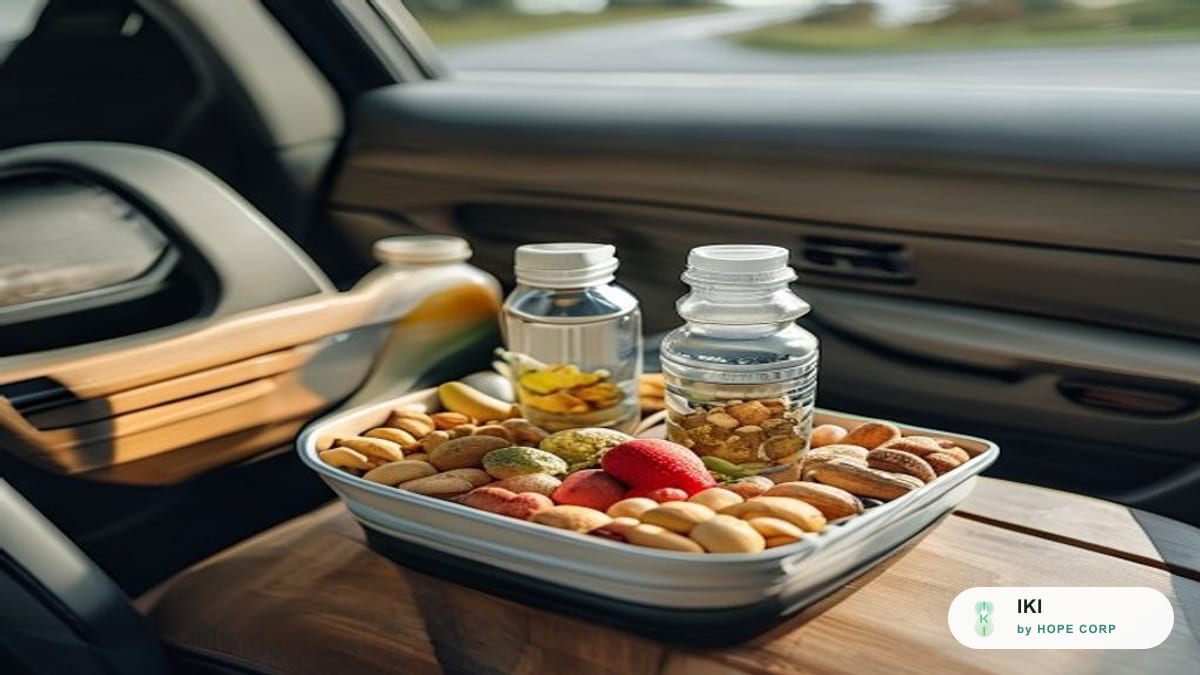
Go easy on deep-fried greasy food, overly salty dishes, and carbonated sugary drinks, since they easily cause bloating, thirst, and a heavy feeling. Instead, keep a few healthy snacks ready in the vehicle: bananas, unsalted nuts, boiled corn, a carton of plant-based milk, or a few slices of whole-grain bread. They're compact and keep you from getting ravenously hungry without having to pull into a roadside eatery on a whim.
Another convenient option for rushed legs is to prepare a gentle protein source that's easy to mix and doesn't weigh on your stomach, such as plant-based protein, for a quick top-up when you haven't had time for a proper meal. This is only a suggestion to support a busy lifestyle, not a replacement for a nourishing meal, and certainly not a replacement for a medical check-up when needed. If you'd like to understand better how to start the day feeling alert, you can also read How to Eat Breakfast for an Energized Day.
Enough water, and don't overuse coffee or energy drinks
Many drivers have a habit of holding back on water to avoid pulling over for restroom breaks. It sounds convenient, but being short on water quietly wears down your alertness: dehydration easily causes fatigue, headaches, dry eyes, and reduced focus — three things a driver absolutely doesn't want.
The wise approach is to sip small amounts steadily throughout the journey rather than gulping it all at once. Keep a bottle within reach, and treat each rest-stop visit not as a nuisance but as a beneficial short break: a chance to stand up and move while keeping your body hydrated. Building the habit of drinking water the right way every day will help you keep this up without feeling constrained.
About coffee, let's be frank. A moderate amount of coffee can help you feel more alert for a short while, and that's normal. But coffee doesn't create new energy; it only temporarily masks the feeling of fatigue. The sleep debt accumulated from lack of sleep is still fully there, and when the coffee wears off, the tiredness often comes back even heavier.
Energy drinks call for even more caution. Downing can after can to force yourself alert easily causes a racing heart, restlessness, shaky hands, and disrupted sleep afterward. Most dangerous of all is the false sense of alertness that makes you overconfident about pushing on instead of stopping to rest. Remember: stimulants are not a solution for drowsiness — proper rest is. Coffee should only be a small aid, not a crutch to drive through the night.
Protecting the spine, neck, and shoulders when driving for hours
Sitting in one position for many hours on end is a silent burden on a driver's spine. Pressure builds on the lower back, neck, and shoulders day after day, leading to chronic aches that many people simply learn to live with. The good news is that most of it can be prevented with a few simple adjustments.
First is sitting posture. Adjust the seat so your back rests comfortably and keeps the natural curve of your spine, both legs reach the pedals without leaning forward, and your hands rest on the wheel in a relaxed position rather than reaching or tensing. A thin lumbar cushion tucked into the lower back can make a big difference on long legs. Keep your head and neck naturally upright, avoiding leaning forward for too long, since that's a leading cause of neck and shoulder strain.
Equally important is movement. The human body isn't designed to be still for many hours. About every two hours, pull over in a safe spot, step out, and take a few minutes to walk around, roll your shoulders, gently rotate your neck, reach your arms overhead, and lean to each side. These few simple movements help blood circulate again, stretch tight muscles, and noticeably reduce that end-of-day soreness. It's also a chance for your eyes to rest and your mind to feel more alert. You can also explore ideas for Gentle Movement Every Day to keep your body supple even when work forces you to sit a lot.
Caring for your eyes and keeping focus
A driver's eyes work continuously, straining to watch the road, signs, and mirrors in every lighting condition. Eye fatigue isn't just uncomfortable; it directly reduces your judgment and reflexes, so caring for your eyes is also caring for safety.
During the day, a good pair of sunglasses helps cut glare and eases eye strain in harsh sunlight. At night, keep the windshield and headlights clean, since dust scatters the light and forces the eyes to adjust more. Avoid looking straight into oncoming headlights; direct your gaze slightly toward the right edge of the road so you're not dazzled.
Now and then, give your eyes a rest by blinking deliberately and looking far into the distance on quiet, safe stretches, so the eye muscles can relax instead of staying fixed at one distance. If your eyes feel dry, a bottle of artificial tears kept in the vehicle can help. When your eyes start to blur, ache, or see double, that's a clear signal that both your eyes and your body need rest, and you should stop.
Focus also depends on limiting distractions. Set up your phone, choose your playlist, or look up directions before you roll, not while driving. Keeping the cab tidy and your mind free of stressful calls is also part of driving safely.
Keeping a steady sleep rhythm despite an irregular schedule
This is perhaps the hardest challenge for a long-haul driver. Hours change constantly — some trips run at night, some set off at dawn — throwing the body's internal clock out of sync. Even so, there are ways to protect your sleep better.
Try to keep a relatively steady sleep window whenever possible, even on days off, so the body is less disrupted. When you have to sleep during the day after a night shift, create the darkest, quietest sleep environment you can: blackout curtains, an eye mask, and earplugs are all worthwhile allies. Avoid using your phone right before sleep, since the screen light makes it harder for the brain to drift off.
Before a night shift, a short nap in the afternoon can help you bank energy for the journey. Conversely, after finishing a night shift, prioritize letting your body catch up on sleep instead of diving straight into other tasks. Sleep isn't a luxury you can trim at will; for a driver, it's the foundational condition for safety. Some people find it more comfortable to have a gentle relaxing habit before rest, such as a warm cup of herbal tea to create a settling feeling that eases them into sleep. This is only a habit to support relaxation, not a replacement for enough sleep or for a medical check-up when sleep problems persist.
Signs you should see a doctor
Proactive care is good, but knowing how to listen to your body and see a doctor at the right time matters even more. The nature of the job — sitting for long hours, eating irregularly, and stress — puts drivers in a group that needs to pay more attention to health, so regular check-ups should be a routine, not something you do only when you feel unwell.
See a doctor early if you have persistent or recurring signs such as: chest pain, tightness, or heaviness, and shortness of breath; numbness in the hands and feet; frequent dizziness, lightheadedness, or faintness; a lingering headache; noticeably blurring vision. Pay special attention to loud snoring accompanied by moments of pauses in breathing during sleep, or excessive daytime sleepiness despite enough sleep at night, as these may be signs of a sleep disorder that needs specialist examination.
Baseline numbers like blood pressure and blood sugar should also be monitored regularly, since they can change quietly without causing obvious discomfort until they become serious. Don't skip your body's signals just because you're reluctant to spend time or money. A timely check-up is always far cheaper than the consequences of ignoring the signs. This article shares general wellness information only and does not replace a doctor's diagnosis and advice.
Closing words
The long-haul driving profession demands endurance, and it's your health that lets you go the distance. Small habits like sleeping enough before a trip, stopping to rest at the right time when drowsy, eating in moderation, drinking enough water, adjusting your sitting posture, and moving mid-leg add up to make a big difference to every day at the wheel. Caring for yourself isn't anything grand; it's a series of kind choices you make for yourself each day.
At IKI Healing, we believe lasting health comes from healthy habits kept up steadily. If you're looking for a gentle, convenient way to add nutrition to a busy schedule, IKI's plant-based protein and herbal teas can be a supportive idea for your lifestyle, alongside balanced eating and proper rest. Take care of your health so every trip is safe, and always come home safely.