
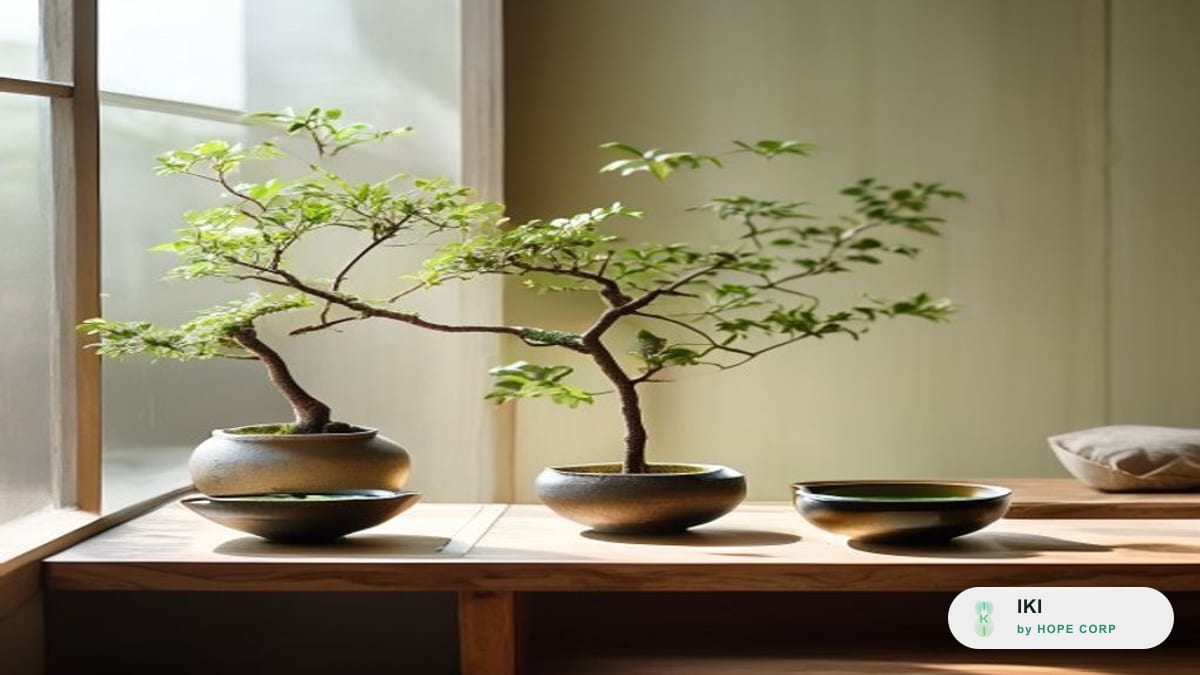
Have you ever wondered why you get up each morning? For many people, that question sounds a bit too grand, even a bit heavy, so it usually gets brushed aside in the whirl of work and to-do lists. But in Japan, there's a simple word for exactly that: ikigai, which loosely means a reason for being, the reason you want to climb out of bed and start a new day.
What's interesting is that ikigai isn't some lofty philosophy reserved for people chasing the grand meaning of life. In everyday Japanese understanding, ikigai sits right inside the small things: a morning cup of tea, a little garden that needs tending, a loved one to talk with, work you find meaningful. This article walks through the concept of ikigai in the gentlest, most practical way, to show that nurturing a daily reason for being isn't out of reach at all, and that it's a beautiful part of caring proactively for your mental wellbeing.
What is ikigai
Ikigai is a Japanese word, combining "iki" meaning life and "gai" carrying the sense of worth or value. Put together, ikigai is usually translated as a reason for being, what makes life worth living, or more simply, the reason you get up each morning. It's a concept deeply woven into Japanese culture, spoken of in everyday life rather than confined to books.
What stands out is how simply the Japanese understand ikigai. When asked what their ikigai is, many people don't talk about a grand career or wealth; they talk about things that might seem small: getting to look after a grandchild, tending a garden, meeting friends over tea, cooking a good meal for the family. For them, ikigai isn't a mountain to conquer, but a small stream that flows steadily through each day.
In the West, ikigai is often illustrated with a diagram of four overlapping circles: what you love, what you're good at, what the world needs, and what you can be paid for. The point where all four meet is said to be your ikigai. This diagram is genuinely useful for reflection and self-inquiry, but it's worth being clear that it's a modern interpretation, not the traditional root of the concept. If you feel you haven't found the perfect intersection of those four circles, don't worry; the Japanese themselves don't live by that diagram. Their ikigai is far gentler and more down-to-earth.
This simple way of understanding is actually the most valuable lesson of all. It removes the pressure to find some grand "mission" and instead invites you back to the joys and meaning already around you, ones you simply haven't noticed yet.
Why a reason for being matters for your spirit
Humans are creatures who need meaning. When your days are filled with nothing but tasks, one deadline after another responsibility, without any sense of "what am I living for," your spirit can easily feel empty and worn down. On the other hand, when you have a few reasons, however small, to want to get up, each day gains a little more of an anchor.
A reason for being gives you a sense of direction. It's like a gentle compass, one that doesn't force you to move fast or far, but simply helps you know where you're heading and why. On hard days, it's precisely that feeling, "I still have something to do, someone to care about, a joy to look forward to", that helps many people keep going steadily.
Ikigai is also closely tied to connection. A great deal of a person's ikigai revolves around others: caring for family, helping the community, sharing experience, creating something useful for people around you. The feeling of still being useful, of still belonging to something larger than yourself, is a very natural source that nourishes your spirit. This is why people living in tight-knit communities, with clear roles and a sense of being valued, tend to hold onto a steady spirit over the years.
Besides that, having a reason for being makes it easier to face life's low points. Everyone has moments of exhaustion, discouragement, or a sense that nothing matters. In those moments, a familiar ikigai, even something as small as watering plants each morning or a weekly phone call to your mother, can become a gentle thread pulling you back into the rhythm of life, reminding you that there are still things worth showing up for.
It's worth saying honestly: ikigai is one way of caring for your mental wellbeing, not a solution for every psychological difficulty. If you're going through a period of sadness, insomnia, or prolonged anxiety, seeking out a mental health professional or doctor is the right thing to do, and it's not at odds at all with nurturing ikigai in your life.
How to find your own ikigai
Ikigai isn't something you can buy or force yourself to figure out in one evening. It usually reveals itself gradually, through observation and experience. Here are a few gentle ways to begin, pick whichever feels right for you.
Notice the moments when you lose track of time
Pay attention to what makes you forget time is passing during the day. For one person it's drawing, for another cooking, gardening, reading, playing with their kids, fixing things, or writing. That state of being "absorbed" is often an important clue to ikigai, since it shows what genuinely draws you in from within, not because anyone is telling you to.
Ask yourself a few gentle questions
You don't need to answer right away; just let these questions linger in your mind for a few days: What made you smile recently? If you had a completely free morning, what would you want to do? What good thing do you want to leave behind for the people around you? When do you feel most like yourself? These questions aren't meant to produce a definitive answer, but to help you listen to yourself more clearly.
Keep a small journal
Over a few weeks, spend a minute or two at the end of each day jotting down a moment that felt pleasant, alive, or meaningful. It might just be "made a lovely pot of tea this morning," "called grandma, felt happy," or "finished something I really cared about." After a while, reading back, you'll notice a few recurring themes. That's where your ikigai is quietly hiding.
Start small and let yourself experiment
Ikigai doesn't have to be perfect from the start. If you think you might find joy in growing plants, start with a single small pot. If you feel drawn to helping others, try a small volunteer activity. Ikigai grows through action, not through endless thinking. Let yourself try things, keep what fits, let go of what doesn't, all at an unhurried pace.
One important thing to remember: don't turn "finding your ikigai" into a new source of pressure. If you haven't been able to put a name to your reason for being yet, that's completely normal. Many people live very fully without ever having defined their ikigai; they simply live with the things they cherish, day after day.
Ikigai in small daily things
A common misconception is thinking ikigai has to be something grand, like a lifelong career or a burning passion. But the beauty of ikigai, in the Japanese sense, actually lies in its smallness and steadiness. It's the tiny, repeated joys that weave together a warm inner life.
Think about your mornings. Instead of rushing straight to your phone, you could spend a few minutes on a small ritual you love: brewing a warm cup of tea, opening a window to breathe, watering a plant, or simply sitting still to watch the sunlight. The Japanese place great value on such everyday rituals, because they anchor you in the present and give the new day a gentle beginning. If you'd like to build moments like these, the article Morning Habits of People Who Live Well has plenty of practical suggestions to get started.
At work, ikigai can be the feeling of doing something well, helping a colleague, or seeing that what you make is useful to someone. Not every job is a passion, but almost every job holds a small corner of meaning if you pay attention. That small corner is what keeps the working hours from feeling dry.
In relationships, ikigai often shows up most clearly. A meal cooked for a loved one, a check-in call, coffee with an old friend, a well-timed word of encouragement for someone. The feeling of being connected and needed is one of the deepest sources of human meaning. Many people find their greatest ikigai precisely in caring for and loving others.
And don't forget your own private interests, the things you do purely because you enjoy them, for no one else. Reading a good book, walking in the park, listening to music, caring for a pet, learning something new. These pure joys nourish the spirit in their own particular way, reminding you that life isn't only about obligation, but also about enjoyment. When these small moments are paired with gentle movement, such as a light walk, the pleasant feeling becomes even more complete; you can learn more in Gentle Daily Movement for a Supple Body.
Ikigai and a balanced pace of life
Ikigai doesn't exist apart from the body and daily habits. A happy spirit usually goes hand in hand with a body that gets enough rest, moves regularly, and is nourished well. When you're chronically short on sleep or worn down for too long, even the things you once loved can start to feel dull. That's why caring for your spiritual reason for being and caring for your body support one another.
Japanese people in regions known for living fully often share a few simple habits in common: moderate, sufficient eating, gentle movement built into daily life like walking and gardening, close ties to community, and an unhurried attitude toward life. Ikigai is the spiritual piece of that picture, while sleep, meals, and movement are the pieces belonging to the body. Enough sleep gives your spirit the foundation it needs to enjoy its own reason for being; if sleep is something you're currently struggling with, the article Quality Sleep could be a good place to start.
Keeping balance also means not turning ikigai into something to compete over or show off. Your ikigai doesn't need to impress anyone, doesn't need to be posted on social media, doesn't need to be bigger than anyone else's. It's your own private, genuine relationship with yourself. Sometimes, precisely because it's quiet and unshowy, that reason for being lasts all the longer.
Misconceptions about ikigai
Around the concept of ikigai, there are quite a few skewed interpretations that leave people feeling pressured instead of at ease. Let's untangle a few of them.
"Ikigai has to be one single, grand passion." Not necessarily. You can have several ikigai at once, and they can shift with each stage of life. Your ikigai in youth might be career and learning; as a parent, it might be family; in retirement, it might be a garden and old friends. This flexibility is normal, and it's part of what makes it beautiful.
"If you haven't found your ikigai, your life is meaningless." This is an unnecessary pressure. Many people live very meaningfully without ever having sat down to define their ikigai. Not being able to name it doesn't mean you lack it. Just keep living, observing, and cherishing, and meaning will gradually reveal itself.
"Ikigai has to bring money or success." This interpretation comes largely from the modern four-circle diagram. In Japanese tradition, ikigai isn't necessarily tied to income at all. Many of the most beautiful forms of ikigai cost nothing: family bonds, nature, creativity, kindness.
"Finding your ikigai is a one-time task." In truth, nurturing ikigai is a lifelong journey, shifting and adapting with your circumstances. There are seasons when your reason for being shines brightly, and seasons when it grows quieter. What matters is staying connected to the things you cherish, and letting them grow and change along with you.
Understanding ikigai correctly lets you approach it with ease, as a gentle invitation to cherish life, not as an assignment to complete.
Conclusion
Ikigai isn't a destination to conquer; it's a way of seeing and living each day so it holds meaning and joy. The most beautiful part of this idea is that it doesn't ask you to be wealthy, successful, or extraordinary. It simply invites you back to the small things already around you, and to learn to cherish them.
Start with a gentle question today: what makes you want to wake up tomorrow morning? The answer might just be a warm cup of tea, a loved one to call, a garden to tend, or something you find meaningful. Hold onto that, nurture it, and let it carry you through each day, unhurried. Nurturing a reason for being, alongside caring for your sleep, meals, and regular movement, is how you keep your spirit happy and steady over the long run. If you'd like to go deeper into staying balanced inwardly amid a busy pace of life, read on with Staying Balanced Inwardly Amid a Busy Life as your next step on this journey of caring for yourself.