
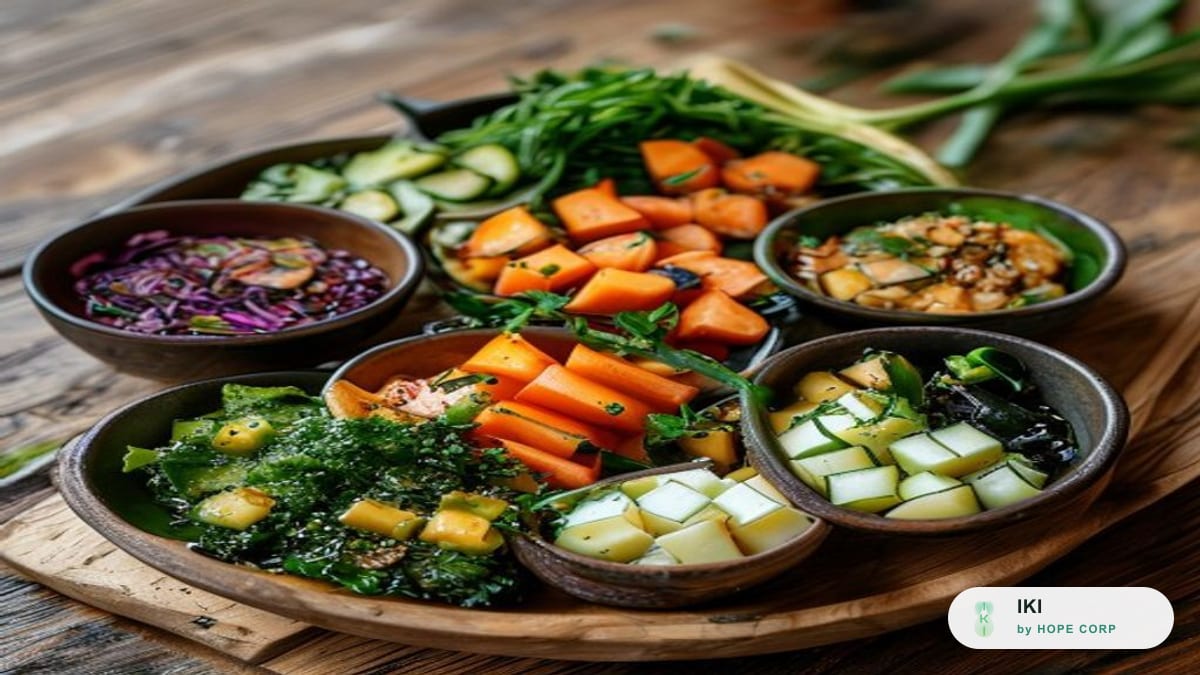
Off the southern coast of Japan lies a small chain of islands called Okinawa, which has long drawn the attention of people studying healthy ways of living. The reason is simple: it's one of the regions in the world with an especially high number of people who live long lives while staying sharp and agile into old age. When people started observing what Okinawans eat and how they live, a picture of moderation and simplicity gradually emerged.
What stands out is that the Okinawan way of eating isn't built on rare ingredients or elaborate recipes. It's built on humble, earthy staples: vegetables, sweet potato, beans, seaweed, fish. That very simplicity is what makes the lessons from Okinawa so approachable and easy to apply, even to a Vietnamese table. This article looks at the core traits of Okinawan eating, why it's held in such regard, and how to bring that spirit into your daily meals in a practical, down-to-earth way.
Okinawa and the story of moderation
Before talking about the food itself, it's worth putting Okinawa in the right context. The longevity and health of its people don't come from a single factor. It's a combination of many things: a plant-forward way of eating, gentle movement woven into daily labor and walking, a clean living environment, tight-knit community bonds, and a relaxed, purposeful spirit. Eating is just one piece of that larger picture, though an important one.
So when learning about the Okinawa diet, the takeaway shouldn't be "eat this and you'll live long," but rather an eating philosophy: moderate, plant-forward, favoring fresh food close to its natural state. This is a healthy, realistic perspective, one that avoids turning any single food into something magical.
Traditional Okinawans tend to eat in a way quite different from the highly processed modern meal. Their table is colorful with vegetables, features sweet potato and beans regularly, uses fish in moderation, and includes relatively little red meat. They also have a habit of eating moderately, not to the point of being stuffed, a trait close to the eat-until-eighty-percent-full philosophy often mentioned in Japanese culture.
Core traits of Okinawan eating
To make this easier to picture and apply, let's go through the most notable traits of Okinawan eating. These are general principles, not a mandatory menu.
Meals built mostly around plants
The most striking trait is the dominant share of plants in each meal. Colorful vegetables, sweet potato, beans, leafy greens, and seaweed make up most of the plate. Animal protein like fish and meat is present but plays a supporting role rather than taking center stage. This structure delivers plenty of fiber, vitamins, minerals, and plant compounds, while also keeping meals light and easy on the body.
For Vietnamese readers, this is the easiest trait to adopt, since a traditional Vietnamese table already features plenty of vegetables. You just need to be more deliberate about letting vegetables take up more of the plate, treating meat and fish as an accent rather than the main event.
Sweet potato in place of some refined carbohydrates
Sweet potato is a signature feature of Okinawan cuisine, used as the main carbohydrate source in many meals. It's rich in fiber, naturally sweet, and digested slowly, creating a longer-lasting, steadier feeling of fullness than white rice or refined carbohydrates. The lesson here isn't to give up rice, but to diversify your carbohydrate sources and favor whole, minimally processed forms.
Beans and soy show up regularly
Beans and soy products like tofu are a familiar plant-protein source in the Okinawan meal. They provide protein without the saturated fat that comes with some meats, while also delivering fiber and a pleasant sense of fullness. Tofu, black beans, mung beans, and red beans are all humble ingredients easy to find at a Vietnamese market.
Seaweed and food from the sea
Living on islands, Okinawans make good use of seaweed and seafood. Seaweed adds minerals and variety to a meal. Fish is used in moderation, providing protein and healthy fat. Vietnamese people living near the coast, or anyone with access, can also add more fish and seaweed dishes to enrich their menu.
Eating a rainbow of colors
An easily noticed trait of an Okinawan table is the variety of color from vegetables: green leafy greens, orange pumpkin and carrot, purple sweet potato, yellow turmeric. Each color usually carries a different group of nutrients, so eating a rainbow is a simple way to get a wide range of micronutrients without having to calculate anything. It's an easy, memorable trick for anyone.
Eating moderately, not to the point of being stuffed
Beyond what they eat, Okinawans also pay attention to how much. The habit of stopping when you feel just enough, before your stomach feels tight, keeps meals light and the body comfortable. This overlaps with the eat-to-eighty-percent-full philosophy, which you can explore further to round out your own eating habits.
Bringing the Okinawa spirit to a Vietnamese table
The wonderful thing is that you don't need to switch to Japanese food or import ingredients to learn from the Okinawan way of eating. Its core spirit can be fully realized with familiar Vietnamese food. Here's how.
More vegetables, meat and fish as the supporting act
Start by letting vegetables fill about half your plate. Boiled vegetables, lightly stir-fried greens with little oil, vegetable soup, and salads are easy, familiar dishes to make. Once vegetables take up enough space, meat and fish naturally settle into a supporting role. You don't need to give up meat, just change the ratio. The article Leafy Greens Every Day has more suggestions for working vegetables into your meals more easily.
Swap part of your white rice for sweet potato and root vegetables
Try replacing part of your white rice with sweet potato, taro, corn, or brown rice a few times a week. This diversifies your carbohydrate sources and increases fiber. You can boil a batch of sweet potato ahead of time to keep on hand. Don't force yourself to give up rice entirely if you're not used to it; gradual change is what lasts.
Add beans to the table
Tofu, black beans, mung beans, and red beans are inexpensive, easy-to-cook plant-protein sources. A steamed tofu dish, a bean soup, or a lightly sweetened bean dessert a few times a week enriches your meals while adding healthy protein. If you're interested in getting enough protein from plants, the article A Balanced, Nutritionally Complete Plant-Based Diet offers a fuller framework.
Favor steaming, boiling, and light cooking
Okinawan cooking leans toward steaming, boiling, and simmering rather than deep-frying. This preserves the natural flavor of food and keeps meals lighter. Vietnamese cuisine already has plenty of steamed and boiled dishes; that's an advantage worth using. Let fried food play an occasional role rather than a regular one.
Eat a range of colors and varieties through the week
Don't repeat the same few vegetables over and over. Actively rotate different, differently colored vegetables across your meals: leafy greens today, pumpkin tomorrow, carrot and beetroot the day after. This weekly variety helps you take in many kinds of nutrients without overthinking it.
Eat slowly and stop when you feel just enough
Finally, pair a plant-forward way of eating with the habit of moderate eating. Eat slowly, chew thoroughly, and stop when you feel light rather than stuffed. This spiritual piece matters just as much as the ingredients themselves, rounding out the Okinawan approach to eating.
More than food: the lifestyle around the table
It would be incomplete to talk only about the food and skip the context that makes Okinawa special. The table there isn't separate from a relaxed, connected way of life. People tend to move gently and regularly through gardening, walking, and tending plants, rather than training intensely and then sitting still all day. This spread-out movement pairs naturally with how they eat: eat just enough to stay light, then keep moving through the day.
Another often-mentioned trait is the spirit of community. Meals are frequently shared, cooked and enjoyed together, turning eating into a moment of connection rather than just fuel intake. The feeling of belonging to a community, having people to talk with and lean on, is considered an important part of a settled, peaceful life. For us, the lesson is close to home: cherish family meals, sit down and eat with loved ones, talk, and eat unhurriedly. A warm, relaxed meal is sometimes worth just as much as the dish itself on the table.
This also reminds us not to turn healthy eating into a source of stress. The spirit of Okinawa is one of ease, simplicity, and consistency, not strictness or obsession. Balanced eating should be a source of joy, not pressure.
Misconceptions to avoid
When learning about the diet of a long-lived region, it's easy to fall into a few misconceptions. Let's untangle them for a clearer perspective.
"Just eat like Okinawans and you'll live long." Longevity is the combined result of genetics, environment, movement, spirit, and many other factors, not a direct consequence of any single way of eating. Learning the spirit of moderate, plant-forward eating is a good thing, but don't expect it to guarantee anything. Treat it as a healthy habit worth nurturing, not a promise.
"You have to use authentic Japanese ingredients for it to count." Not necessary. The value lies in the principle, not the origin of the ingredients. Vietnamese vegetables, beans, sweet potato, and fish serve this spirit perfectly well. Chasing expensive imported ingredients can sometimes work against the very simplicity at the heart of Okinawan eating.
"Eating a lot of plants means you'll be short on protein." If you know how to combine beans, soy, fish, and a moderate amount of animal food, a plant-forward meal still provides enough protein. The key is variety and balance, not the assumption that more vegetables automatically means less nutrition.
"Cutting out meat entirely is the 'correct' way to do Okinawa." The Okinawan diet leans heavily on plants but doesn't eliminate animal protein. Fish and meat still appear in moderate amounts. This is about balancing the ratio, not banning anything outright.
Starting gently
If you'd like to try this, don't aim to overhaul your entire table right away. Lasting change comes from small steps, repeated consistently.
- Week one: focus on increasing vegetables in each meal, so vegetables fill about half your plate.
- Week two: add one or two meals with a bean dish, and try swapping part of your rice for sweet potato a few times.
- Week three: pay attention to cooking methods, favor steaming and boiling over frying, and rotate through different colored vegetables.
- Week four: add the habit of eating slowly and stopping when you feel just enough, to round out the spirit of moderate eating.
Choose changes that fit your family's taste and pace of life. A change you can keep up for the long run is worth far more than a perfect menu you abandon after a few days.
Conclusion
The Okinawa diet teaches a simple yet profound lesson: lasting health tends to come from moderation and humble ingredients, not from anything elaborate or expensive. Eating more plants, adding beans and sweet potato, favoring fresh, minimally processed food, and eating moderately, these are principles anyone can learn to practice with familiar food close at hand.
This is also the spirit IKI pursues on the journey toward balanced eating: caring for yourself through small, natural, sustainable habits rather than chasing passing trends. You can start with your very next meal, with just one thing: add vegetables and cut back on oil. For a fuller framework on balancing your meals, read on with 8 Healthy Food Groups. And if you have an underlying condition or a special diet, talk with a nutritionist for suggestions tailored to you.