
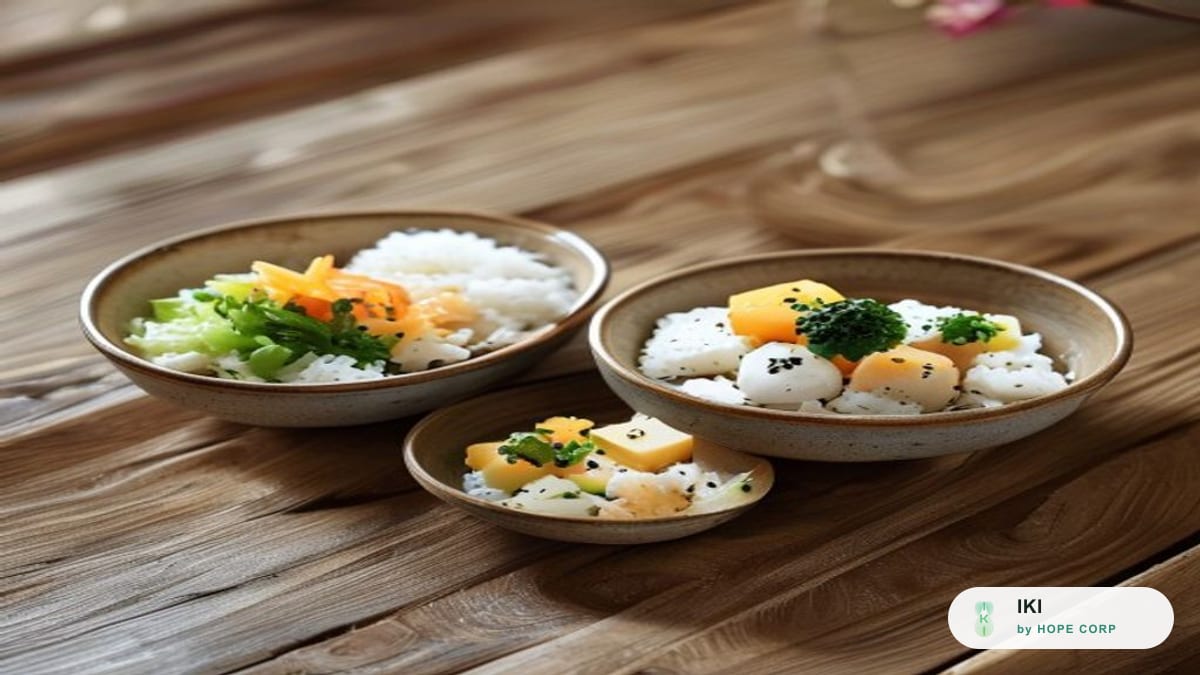
There's a short phrase that the Japanese, especially people in Okinawa, often remind themselves of before every meal: hara hachi bu. Loosely translated, it means to eat until you're about eight-tenths full, then stop. Not fasting, not a harsh diet, just pausing a little before your stomach truly feels stuffed.
It might sound almost too small a thing to matter, yet it's one of the eating-culture traits most often mentioned when people study the lifestyles of regions known for long, healthy lives. What's interesting is that this habit doesn't call for expensive food or complicated recipes. It asks for just one change: how you listen to your body while you eat. This article looks at what hara hachi bu really means, why such a simple habit is held in such regard, and how to bring that spirit into the familiar Vietnamese table you sit at every day.
What hara hachi bu really means
In Japanese, "hara" means stomach, "hachi" means the number eight, and "bu" refers to a tenth. Put together, hara hachi bu means "stomach eight-tenths," or eating until you're about 80% full, then stopping. It's a gentle reminder about moderation, passed down through generations as part of everyday life.
The core thing to understand is that hara hachi bu is not a diet with strict charts and numbers. It doesn't tell you what to eat or avoid, and it doesn't count calories. Instead, it focuses on just one thing: how full you feel when you put down your chopsticks. Practicing this habit trains you to recognize the line between "enough" and "too much," and to actively stop right at that comfortable point.
Why 80%, rather than eating until you're completely full? The reason lies in a familiar quirk of the body: the feeling of fullness doesn't arrive instantly. It takes some time after you start eating for your body to register and signal that you've had enough. If you eat too fast and keep going until you feel truly full, there's a good chance you've already taken in more than you needed without realizing it, since the fullness signal was only just arriving. Stopping at around eight-tenths is a way of leaving room for that lag, so you avoid eating past what your body actually needs.
In other words, hara hachi bu is a mindful way of eating. Instead of eating on autopilot until your plate is clean or your stomach is tight, you eat with awareness, paying attention to how you actually feel. This is exactly what makes the habit resonate with the spirit of proactive wellness: small, consistent choices grounded in understanding and respecting your body.
Why this small habit deserves attention
People in Okinawa and many parts of Japan are known for their long lifespans and disciplined daily routines. Within the broader picture of their lifestyle, moderate eating is a piece often mentioned alongside regular gentle movement, close community ties, and a relaxed spirit. It's worth being clear that no single habit is a "magic key"; health is always the result of many factors working together. But eating to a comfortable fullness is one of the easiest habits to picture and to copy.
The first and most easily felt effect is how you feel after the meal. When you eat to the point of being stuffed, the body often responds with heaviness, drowsiness, and sluggishness. An overly large lunch is a familiar reason many people slump into a foggy, hard-to-focus early afternoon. In contrast, stopping at a comfortable point usually leaves you feeling light, alert, and quicker to settle back into your work rhythm.
Second, eating to a moderate fullness lets your digestive system work more gently. A moderate amount of food is easier to process than a large load taken in all at once. Many people who practice eating slowly and stopping at the right point share that their stomach feels more comfortable, with less bloating or sluggishness after meals. This is a comfort experienced in daily life, not a promise about health outcomes.
Third, this habit indirectly helps you keep reasonable portions over time. Once you're used to listening to your true sense of fullness, you're less likely to be swept along by the habit of finishing everything on your plate or eating driven by emotion. This helps the amount of food you take in stay naturally and sustainably aligned with your body's actual needs, rather than through force.
Finally, there's a rarely mentioned emotional value: eating slowly and mindfully turns a meal into a moment to savor, rather than a task to get through. When you truly pay attention to the flavor, texture, and feel of your food, the meal becomes more emotionally complete.
Applying hara hachi bu to a Vietnamese table
The good news is you don't need to switch to Japanese food to practice the spirit of hara hachi bu. The heart of it lies in how you eat, not what you eat. Here are specific ways to bring this habit into a familiar Vietnamese meal.
Eat more slowly and chew more thoroughly
This is the foundation of everything else. Try putting your chopsticks down between bites, chewing more than usual, and taking your time. A meal should last at least around twenty minutes, so your body has enough time to register how full you actually are. For someone used to eating quickly, this is the hardest change to make, but also the most worthwhile. You can start with a simple trick: try to eat a little slower each meal than you did the day before.
Use smaller plates and bowls
The size of your dishware affects how much food you take more than you might think. A large plate tends to get piled high and finished out of habit. Switching to smaller plates and bowls makes a portion look generous while keeping the actual amount reasonable, and it creates a natural pause before you decide whether to take more. A spread of several small dishes, a little of each, also encourages variety and moderation.
Pause partway through to check in with yourself
A useful habit is to pause partway through a meal, set your chopsticks down for a few minutes, and ask yourself: am I still genuinely hungry? This small question pulls you out of automatic eating mode and brings your attention back to your body. Often you'll realize you're nearly satisfied, which helps you stop at the right moment instead of eating more just because there's still food on the table.
Don't do other things while eating
Eating while scrolling your phone, watching TV, or working is the fastest way to lose track of your sense of fullness. When your mind is elsewhere, you eat on reflex and find it much harder to notice your body's signals. Try dedicating mealtime just to eating, focused on what's in front of you. This is an important part of mindful eating.
Start with vegetables and fiber-rich dishes
Beginning your meal with boiled vegetables, vegetable soup, or a fiber-rich dish is a clever way to feel satisfied sooner while still keeping things light. Vegetables take up volume and are rich in fiber, creating a pleasant sense of fullness that naturally helps you eat more moderately when it comes to rice and the main dishes. A traditional Vietnamese table already features plenty of vegetables, an advantage you just need to make the most of.
Serve a moderate amount of rice, and add more if needed
Instead of piling your bowl full and forcing yourself to finish it, serve a moderate amount. If you're still genuinely hungry afterward, add more. This creates a natural checkpoint to reassess how you feel, rather than eating straight through to the point of being overly full. It also helps you avoid the "don't want to waste it" trap of forcing down leftover rice.
Hara hachi bu is not about going hungry
This point deserves clarifying to avoid misunderstanding. Eating to 80% full is entirely different from starving yourself or eating too little. The goal isn't to deprive your body of energy, but to stop at a comfortable point rather than a stuffed one. If practicing this habit leaves you frequently feeling weak, tired, or drained, that's a sign you're eating too little for your needs, not that you're practicing hara hachi bu correctly.
The true spirit of this habit is balance. You still eat full meals, with all the necessary food groups; you're simply eating with attention and stopping when you feel enough. Meal quality still matters just as much: enough good carbohydrates, protein, vegetables, and healthy fat. Hara hachi bu only adjusts the "how much is enough" part; it doesn't replace the need to eat a varied, nutritionally complete diet. If you'd like to understand more about structuring a balanced meal, the article 8 Healthy Food Groups is a good place to start.
Common misconceptions
Around eating to 80% full, there are a few skewed ideas worth untangling so you can practice it in the right spirit.
"Eating to 80% full is a quick way to slim down." Hara hachi bu isn't a formula for fast weight loss. It's a long-term habit that works gradually through consistent, moderate eating. Expecting instant results will only leave you disappointed and likely to give up. Its value lies in consistency, not speed.
"You have to measure exactly 80% to do it right." There's no way to measure the feeling of fullness down to a precise number, and you don't need to. The figure of 80% is just an image to help you remember to stop before you're too full. What matters is the feeling, not the arithmetic. Over time, you'll naturally come to recognize your own comfortable threshold.
"Eating less means you'll always feel hungry." A gnawing hunger usually comes from eating too fast or from a meal lacking fiber and protein, not necessarily from eating a moderate amount. When you eat slowly, get enough vegetables and protein, and stop at around eight-tenths full, most of the time you'll feel comfortably satisfied until your next meal rather than painfully hungry.
"This habit only suits Japanese people." The essence of hara hachi bu is mindful, moderate eating, something that suits people of every culture. A Vietnamese table, with its abundance of vegetables, soups, and steamed or boiled dishes, is actually very well suited to practicing this spirit.
A week of easing into eating 80% full
If you want to start, don't try to change everything at once. Take small steps over about a week, letting your body and habits adjust gradually.
- Days one and two: focus only on eating more slowly. Put your chopsticks down between bites, chew more thoroughly, and stretch each meal a little longer than usual.
- Days three and four: add the habit of serving a moderate portion of rice and starting the meal with vegetables or soup. Pay attention to when the feeling of fullness sets in.
- Days five and six: practice pausing partway through to ask yourself if you're still hungry, and turn off your phone or TV while eating so you can focus.
- Day seven: look back over the week. Did you notice anything different? Do your afternoons feel lighter? Does your stomach feel more comfortable? Jot down a few observations to keep yourself motivated going forward.
Don't aim for perfection. There will be meals where you forget to slow down, or where you eat a bit too much because the food was simply too good. That's fine, just pick it back up at the next meal. It's the consistency over time, not perfection in any single meal, that builds a lasting habit.
Conclusion
Hara hachi bu is a simple yet meaningful reminder from Japanese food culture: stop when you feel enough, rather than eating to the point of discomfort. It doesn't call for special ingredients or complicated charts, just eating a little more slowly and listening to your body a little more closely.
This is also the spirit IKI believes in on the journey toward balanced eating: caring for yourself not through big, dramatic changes, but through small, kind habits, repeated consistently every day. You can start right at tonight's dinner, with just one thing: eat more slowly and stop when you feel light. If you'd like to place this habit within a broader picture of eating well, take a look at the article Eating by Season and Constitution to adjust your meals to your own body and pace of life. And if you have an underlying condition or a special diet, don't hesitate to talk with a nutritionist for suggestions that fit you.